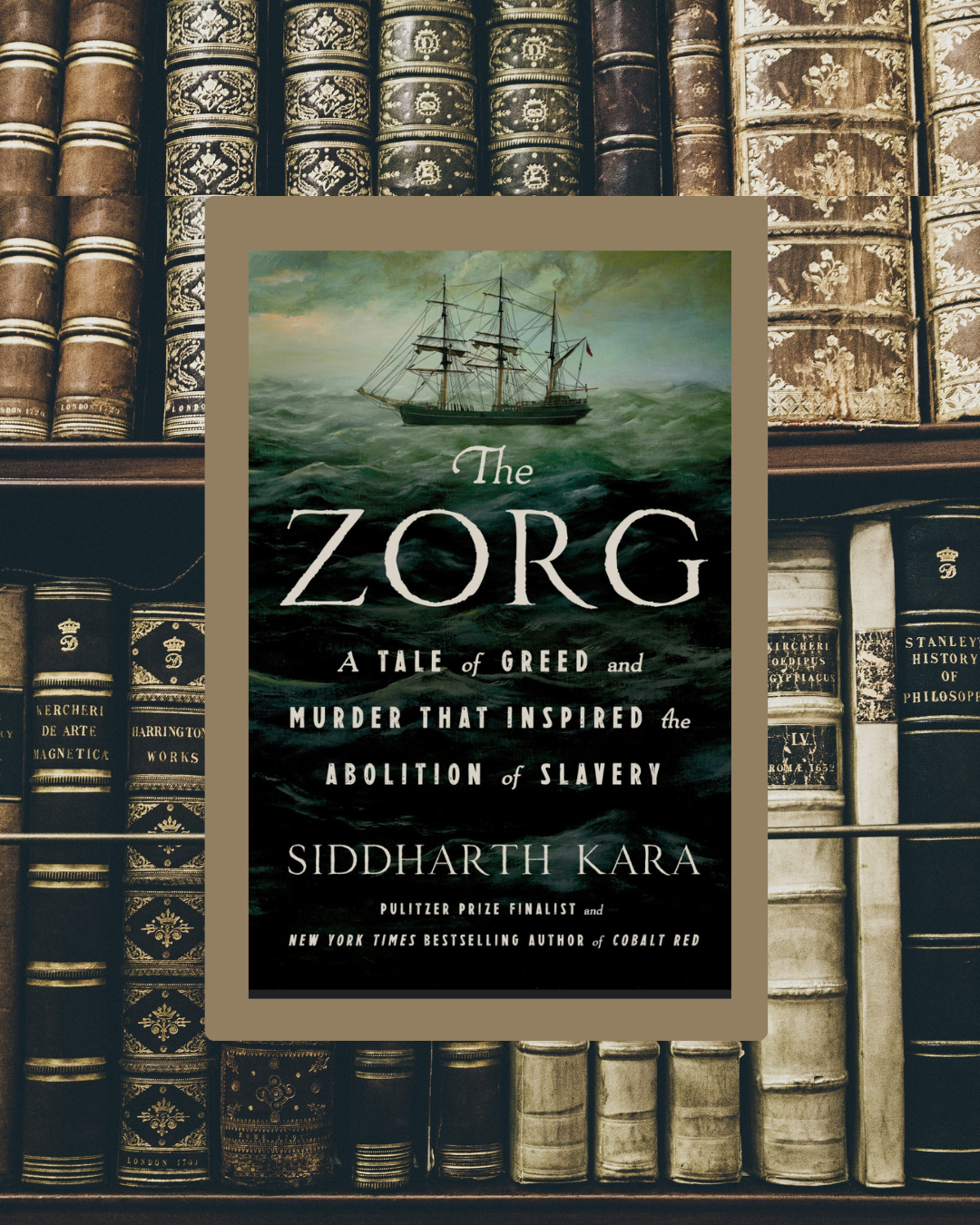
Thank you to MacMillan Publishers and NetGalley for my advance reader’s copy. All opinions contained herein are my own.
In 1780, the triangle/slave trade between the coast of Africa, the US and Caribbean, and England was well-established. Britain maintained a number of forts or at least fortified locations along the western African coast where their slave ships could easily purchase slaves to support colonial agricultural labor needs. However, with the advent of the US Revolutionary War, and ongoing conflicts with the Dutch, French, Spanish and Portuguese, the British ships and the merchants who owned them were constantly finding themselves in difficulties due to the hostilities, piracy and closed ports.
The Zorg was originally a Dutch trader, captured by the British and moved into service to transport a large cargo of Africans to the Caribbean as slaves. The entire process was dehumanizing, filthy, and often-times fatal to the humans stashed as cargo between decks. The Zorg took all of those horrible conditions to extremes – due to poor leadership and outright greed. The author, Siddharth Kara, conducted extensive primary-source research to write this book and the history he traces of this ship, poorly captained, then beset by illness and bad weather, which ultimately resulted in the murder of 132 enslaved people to conserve drinking water on a voyage that ran too long, is extensive and detailed. This horrific episode might have gone unnoticed or unremarked upon in history, had the man appointed captain of the ship (after the original one became severely ill) not filed an insurance claim to recoup financial losses for these 132 slaves. Court evidence from the insurance claim trial showed these people had been thrown overboard not only in panic over the thought that the crew (who were all white) might not have enough water to survive but also because, even if they had survived another 10 days to port, they would have not been in good enough condition to sell and the captain would have taken a loss on his investment.
Outrage and horror over the treatment of the murdered Africans on The Zorg became the cornerstone for court cases in the British courts which eventually became a catalyst for the anti-slavery moment and the subsequent abolishment of the slave trade within Britain. Kara details the history that led up to the fateful moment the crew on The Zorg decided to throw the 132 slaves into the ocean, the impact these decisions would have on the question of slavery and human rights both in Britain and eventually in the United States, as well as the impact it had on the British economy and cultural views towards people of color.
This was not an easy book to read but I think it was an important one. The author obviously did extensive research into diaries, letters, court documents, bills of lading, shipping schedules and military orders that offer an expansive and detailed snapshot of the cultural thoughts around slavery both in Britain and abroad. I found parts of the book (the discussion of the various military forts and the logistics in staffing those) a bit slow-going but overall, would highly recommend this book for those interested in history and the culture of slavery, and how it has affected our thinking even into the present day.
4 out of 5 star read. (It is probably obvious but there are a lot of trigger warnings associated with this book. Please research and tread carefully if you feel these may pertain to you.)


 The Emporium of Forgotten Threads
Leave a comment